
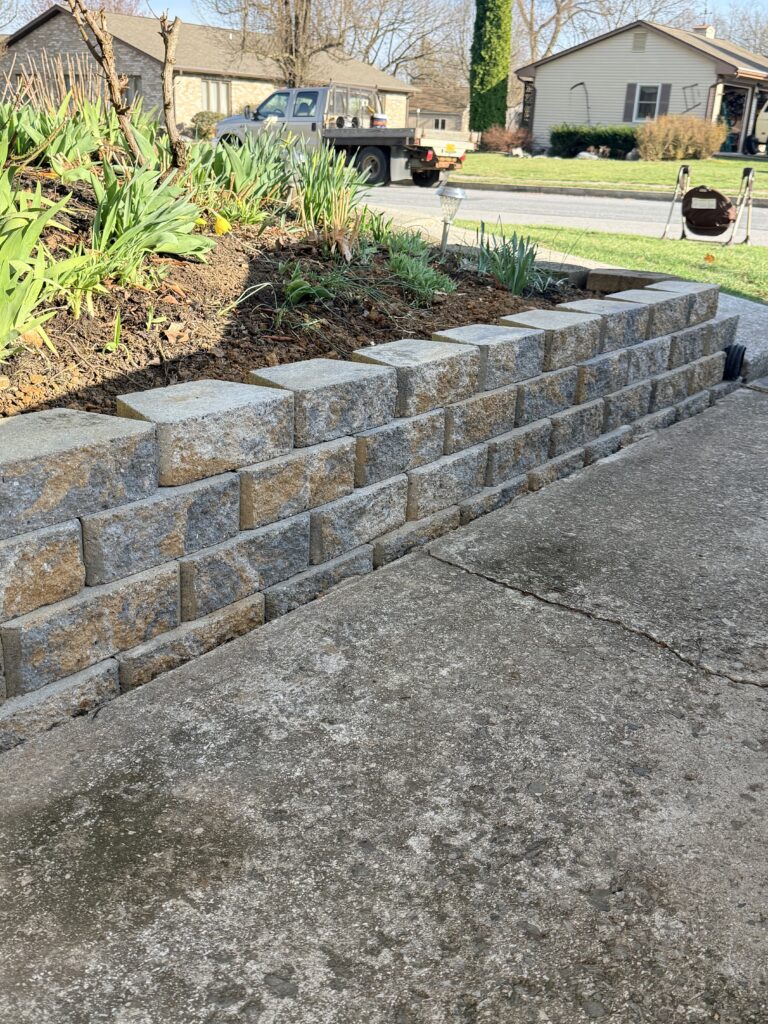
A retaining wall without a proper drainage system isn’t a structural hold, it’s just a dam waiting to break.
Here in Pennsylvania, our heavy clay soils act like a sponge during spring rains. When winter rolls in, that waterlogged soil freezes and expands. This freeze-thaw cycle exerts massive hydrostatic pressure against hardscaping. As an experienced retaining wall builder, I regularly see the aftermath of this pressure: walls that are bowing, leaning, or completely collapsing just a few years after installation.
If you are planning a hardscaping project this year, here is a look behind the scenes at why drainage and proper engineering are the most important factors in keeping your wall standing for decades.
The Anatomy of a Wall That Lasts
Building a reliable retaining wall isn’t just about stacking blocks; it is a strict exercise in water management and structural physics. Here is how we engineer our walls to handle the elements:
- The Trench and Embedment: Before a single block is laid, we excavate our base trench to a minimum of 10 to 12 inches deep. This depth allows us to install a proper compacted base and ensures the first block starts at least 6 inches below grade depending on the wall size. This embedment is critical for locking the wall into the earth.
- High-Density Compaction (2-Inch Lifts): Into this trench goes our base material: 2B stone. Instead of dumping all the stone at once, we compact the material in 2-inch layers. We use a vibratory plate compactor on every single 2-inch “lift” to achieve a 95% standard proctor density, creating a rock-solid foundation that will not yield.
- The “Clean Stone” Backfill: We backfill the space directly behind the wall with at least 12 inches of 2B stone. Because there are no “fines” (dust or sand) in 2B stone, water falls right through it rather than pooling against the back of your wall blocks and causing hydrostatic pressure.
- The Perforated Pipe (Daylighting): At the bottom of the 2B stone backfill, we install a 4-inch perforated drainage pipe. This pipe is installed at grade to ensure water is captured immediately at the base level. As water flows down through the stone, it enters the pipe and is directed safely away from the wall to an exit point.
- Soil Separation & Reinforcement: To keep the native dirt from migrating into our 2B stone, we line the backfill area with non-woven 4-ounce geotextile fabric. For walls that exceed 4 feet in height, we introduce major structural reinforcement by installing biaxial geogrid every two courses to lock the wall block directly into the retained earth.
The Ingold Standard vs. The Budget Build
| Feature | The Ingold Standard | Common Budget Shortcuts |
| Base Preparation | 2B stone, compacted in 2″ lifts to 95% standard proctor density | Loose gravel or insufficiently compacted dirt |
| Drainage Pipe | 4″ Perforated pipe installed at grade | Pipe installed too high or omitted entirely |
| Embedment | 10-12″ trench, first block buried min. 6″ below grade | Trench dug barely below the surface line |
| Backfill Material | 12″+ of 2B Clean Stone | Reusing excavated on-site dirt |
| Reinforcement | Biaxial geogrid every 2 courses (for walls >4ft) | None used |
Built for Local Soils: Our Approach in Mechanicsburg & Camp Hill
Whether we are terracing a steep, wooded grade in Camp Hill or managing runoff for a new outdoor living space in Mechanicsburg, the soil pressure in Cumberland County requires a specific, tailored approach. Every retaining wall we build at Ingold Landscaping is engineered with our specific local freeze-thaw cycles in mind, ensuring your outdoor investment doesn’t end up as a costly repair down the road.
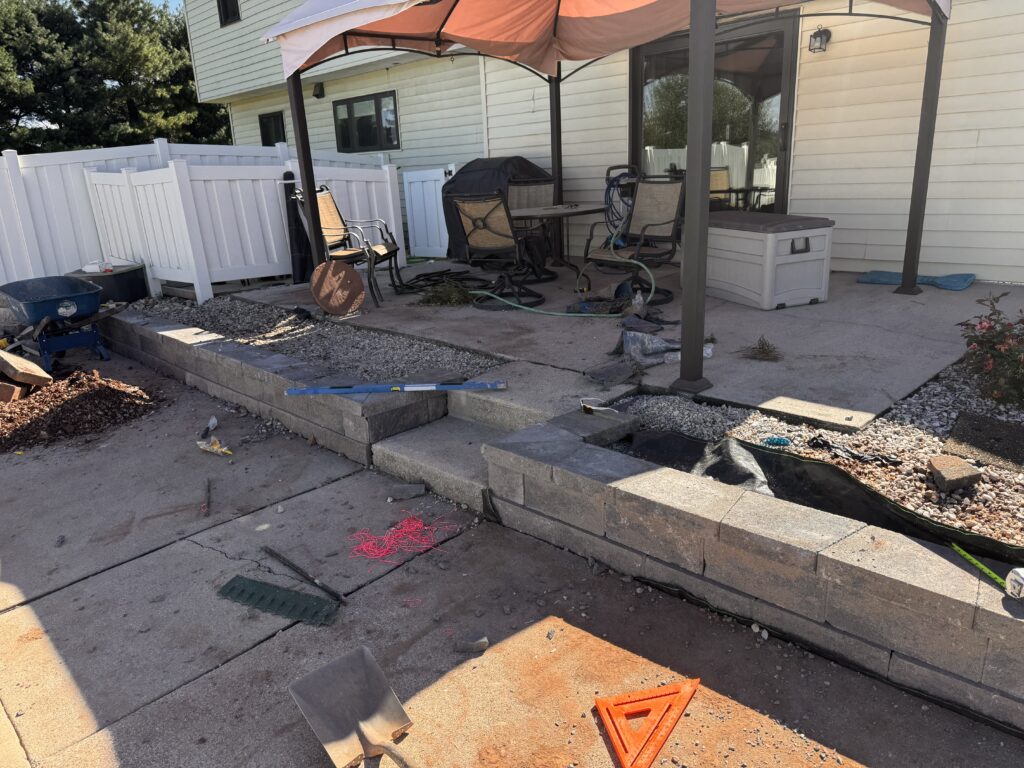
Frequently Asked Questions
Can a contractor just use the dirt they dug out to backfill the wall?
Absolutely not. Excavated dirt (especially our local clay) holds water. When that water freezes, it expands and pushes the wall outward. 2B stone must be used to allow water to drain instantly.
Do I need a permit for a retaining wall in Pennsylvania?
It depends on your municipality and the height of the wall. Many local townships in Cumberland County require permits and engineering plans for walls that are 4 to 5 feet in exposed height (measured from the finished grade to the top of the wall). It is always best to check with your local code enforcement office before digging.
Ingold Landscaping specializes in premium hardscaping, custom paver patios, and structural retaining walls across Cumberland County, including Mechanicsburg, Camp Hill, and the surrounding areas. Contact us today to discuss your next outdoor living project.