

If you’re dealing with standing water in your yard, you’re not alone. Many homeowners experience puddles that linger long after it rains, leading to muddy lawns, dying plants and even potential foundation issues. Left unchecked, poor drainage can create the perfect breeding ground for mosquitoes and damage your landscape.
Luckily, there are several effective yard drainage solutions that can help eliminate standing water and keep your yard dry.
In this post, we’ll cover the best drainage solutions to tackle standing water. Whether you’re looking for a simple fix or a long term strategy, these solutions will help you reclaim your yard from excess moisture.
Standing Water in Yard: Why Does it Occur?
Before jumping into solutions, it’s important to understand why standing water forms in the first place. If your yard remains soggy long after the rain stops, one or more of these common causes might be to blame:
- Poor Soil Drainage
- Low-Lying Areas in Your Yard
- Compacted Soil
- Poor Yard Grading
- Excessive Rainfall or Poor Downspout Placement
Top Yard Drainage Solutions to Fix Standing Water
If you’re tired of dealing with the standing water in yard, there are several effective drainage solutions to help redirect excess moisture and keep your landscape dry. Below are the best methods to eliminate standing water and prevent future issues.
1. French Drains: A Reliable Subsurface Solution
A French drain is one of the most effective ways to remove standing water from your yard. It consists of a perforated pipe buried in a gravel lined trench that redirects water away from problem areas.
Best for: Yards with poor drainage due to compacted or clay-heavy soil.
How it works: Water seeps into the gravel and flows into the pipe, which directs it away from your lawn.
Considerations: Requires trenching and proper sloping for effective drainage.
2. Dry Wells: A Simple Way to Redirect Water Underground
A dry well is a large underground container or gravel-filled pit that collects and slowly disperses excess water into the surrounding soil.
Best for: Areas where water pools in one spot but doesn’t drain well.
How it works: Water from downspouts or French drains is directed into the dry well, where it slowly soaks into the ground.
Considerations: Works best in well-draining soil; may need a filter to prevent clogging.
3. Swales: Natural Drainage That Works with Your Landscape
A swale is a shallow, sloped channel designed to move water away from your yard naturally. It can be lined with grass, stones or native plants to slow water flow and improve absorption.
Best for: Large yards with gentle slopes where water naturally accumulates.
How it works: Directs rainwater toward an appropriate drainage area, preventing erosion and standing water.
Considerations: Needs proper grading to function effectively.
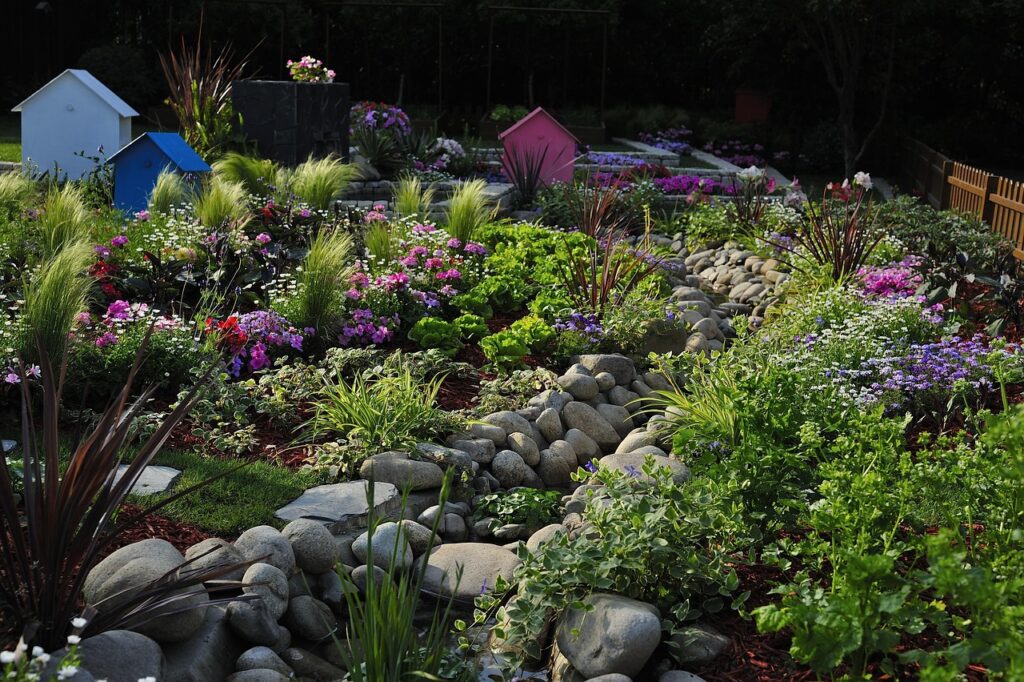
4. Rain Gardens: A Beautiful and Eco-Friendly Drainage Solution
A rain garden is a strategically placed garden filled with deep-rooted plants that thrive in wet conditions, helping absorb excess water while adding beauty to your yard.
Best for: Homeowners looking for a natural, eco-friendly solution.
How it works: Water from downspouts or low-lying areas is directed into the garden, where plants and soil filter and absorb it.
Considerations: Requires plant selection that can handle both wet and dry conditions.
5. Grading and Sloping: Adjusting Your Landscape for Better Drainage
If your yard is not properly sloped, water will naturally pool in low areas. Regrading your yard can ensure water flows away from your home and into designated drainage areas.
Best for: Yards with visible low spots or poor runoff control.
How it works: Soil is strategically added or removed to create a natural drainage slope.
Considerations: Requires professional landscaping if significant regrading is needed.
6. Permeable Pavers and Gravel Paths: Hardscape Solutions
Instead of traditional solid surfaces like concrete, permeable pavers and gravel allow water to drain naturally into the soil beneath them.
Best for: Driveways, patios, and walkways that contribute to runoff issues.
How it works: Water seeps between the pavers or into gravel, reducing surface pooling.
Considerations: May require periodic maintenance to prevent debris buildup.
7. Downspout Extensions and Gutter Adjustments
One of the simplest fixes for standing water is ensuring your gutters and downspouts are properly directing water away from your home.
Best for: Homes where water pools near the foundation or yard edges.
How it works: Extensions move rainwater farther from the house, preventing excessive saturation.
Considerations: Should be combined with other drainage methods for long-term effectiveness.
Which Drainage Solution is Best for Your Yard?
Standing water in your yard can be more than just an eyesore—it can damage your lawn, attract pests and even threaten your home’s foundation. Fortunately, the right drainage solution can eliminate these problems and keep your yard dry and healthy.
The best solution depends on the unique conditions of your landscape. Often, a combination of the methods mentioned provides the most effective long term results.
If you’re unsure which drainage solution is right for your yard, our team specializes in assessing landscape drainage issues and recommending customized solutions to fit your property’s needs. Contact us today for a consultation to keep your yard dry and beautiful year-round.