
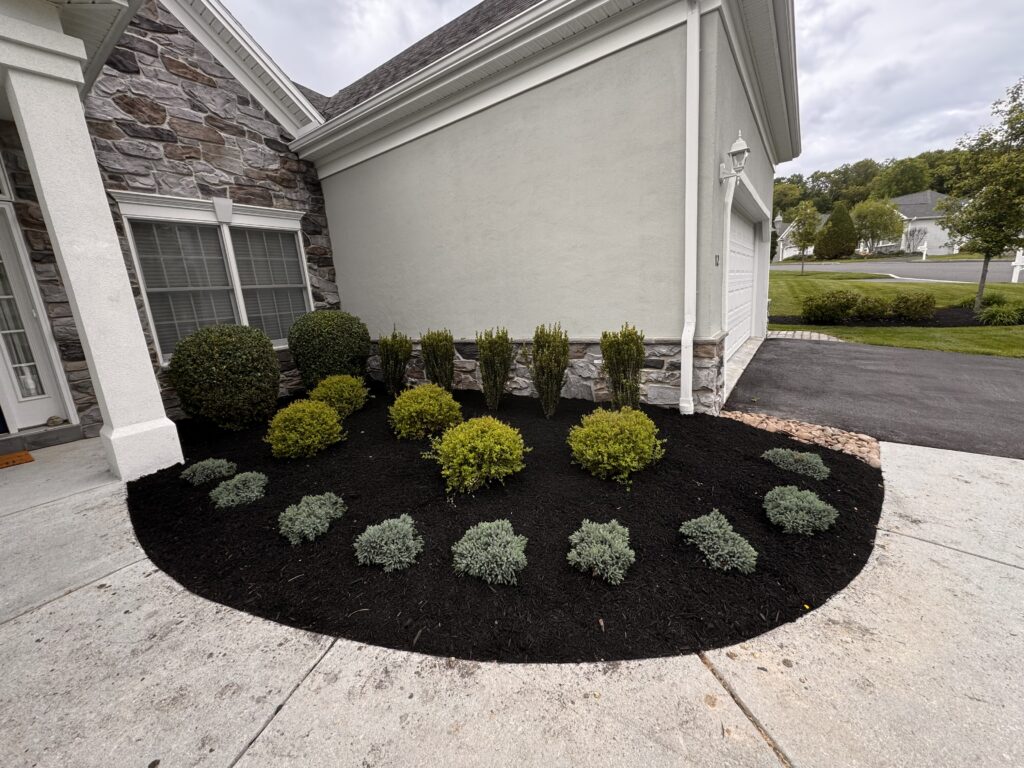
Every spring, we get the same question from homeowners across Mechanicsburg, Camp Hill, and the surrounding area: should I go with dyed mulch or stick with natural?
It’s a fair question. Both have their place, and the right choice depends on what you want your beds to do. But after years of installing thousands of yards of mulch across central PA, we’ll be upfront — for most of our customers, dyed mulch is the better call. Here’s an honest breakdown of why, along with the tradeoffs you should know about.
What’s Actually the Difference?
Natural mulch is shredded bark, wood chips, or other organic material with no added color. Common types include shredded hardwood, pine bark, and cedar. The color you see is whatever the wood naturally is, and it weathers to a grey-tan over a few months.
Dyed mulch is typically shredded hardwood that’s been colored with a pigment, almost always black, brown, or red. The dye itself is usually iron oxide (for reds and browns) or carbon black (for blacks and dark browns). If those sound familiar, it’s because they’re the same pigments used in cosmetics, food packaging, and printer ink — they’re inert, stable, and have been studied extensively.
The Case for Dyed Mulch
It looks better, longer. This is the big one. A fresh installation of dyed black or dark brown mulch holds its color for close to a full season, sometimes longer. Natural mulch starts fading to grey within a few weeks of installation. If curb appeal matters to you, and for most homeowners it does, that’s a meaningful difference.
Sharper contrast with your plants. Dark mulch makes green foliage, flowers, and shrubs pop in a way natural mulch just doesn’t. It frames your landscape rather than blending into it. We see this especially in front-of-house beds, near walkways, and around feature plantings.
A cleaner, more uniform look. Dyed mulch has consistent color and texture from batch to batch. Natural mulch can vary noticeably depending on the source wood. For a polished, finished appearance (the kind that makes a house look intentionally landscaped rather than just maintained), uniformity helps.
It breaks down more slowly. Because dyed mulch is usually made from harder, denser wood, it decomposes at a slower rate than soft natural mulches. That means less frequent replacement and a bed that stays looking full longer.
The Honest Tradeoffs
We’re not going to pretend dyed mulch is perfect. A few things to keep in mind:
It doesn’t feed your soil as quickly. Natural mulch decomposes faster, which means it adds organic matter and nutrients to your soil sooner. Dyed mulch still breaks down eventually, but if your priority is soil enrichment, say for a vegetable garden, natural is the better fit.
Quality varies by source. This is the real thing to watch for. Cheap dyed mulch is sometimes made from recycled wood that can include treated lumber, pallets, or construction debris. Wood treated with chromated copper arsenate (CCA) was banned in 2003, but reclaimed pieces can still end up in low-grade mulch products. That’s not a dye problem. It’s a wood-source problem. Reputable suppliers use clean, untreated wood, and we only source from suppliers we trust.
It can stain. Fresh dyed mulch can transfer color to concrete, pavers, or clothing if it gets wet before the dye fully cures (usually 24–48 hours after installation). Worth knowing if you’re planning to mulch right before a rainstorm.
The dye can fade. Even good dyed mulch loses some color over a season, especially in full sun. It still holds color far longer than natural, but expect some softening of the tone by late summer.
So Which Should You Choose?
Here’s our honest take:
- Go dyed if your top priority is how your landscape looks. Front beds, around the house, near patios and walkways, anywhere curb appeal matters. Black and dark brown are our most popular options and give the cleanest, most polished result.
- Go natural if you’re mulching a vegetable garden, a wooded area where soil health is the priority, or beds where you want a more rustic, organic feel.
- Honestly? Many properties benefit from both. Dyed in the visible front beds, natural in back-of-house or utility areas where appearance matters less.
One Thing That Matters More Than Color
Whatever you choose, application matters more than people realize. Mulch should be 2 to 3 inches deep. Deep enough to suppress weeds and hold moisture, shallow enough that water and air can still reach the roots. And it should never be piled against tree trunks or plant stems (the dreaded “mulch volcano”). That causes rot regardless of whether the mulch is dyed, natural, or something else entirely.
Need a Hand?
We install dyed mulch (black, brown, and red), natural organic mulch, gravel, and decorative stone across the greater Mechanicsburg and Harrisburg area, including Camp Hill, New Cumberland, Carlisle, Hershey, and everywhere in between. If you’re not sure which is right for your property, we’re happy to take a look and give you an honest recommendation.
Give us a call at (717) 220-5506 or request a free consultation via our contact form.